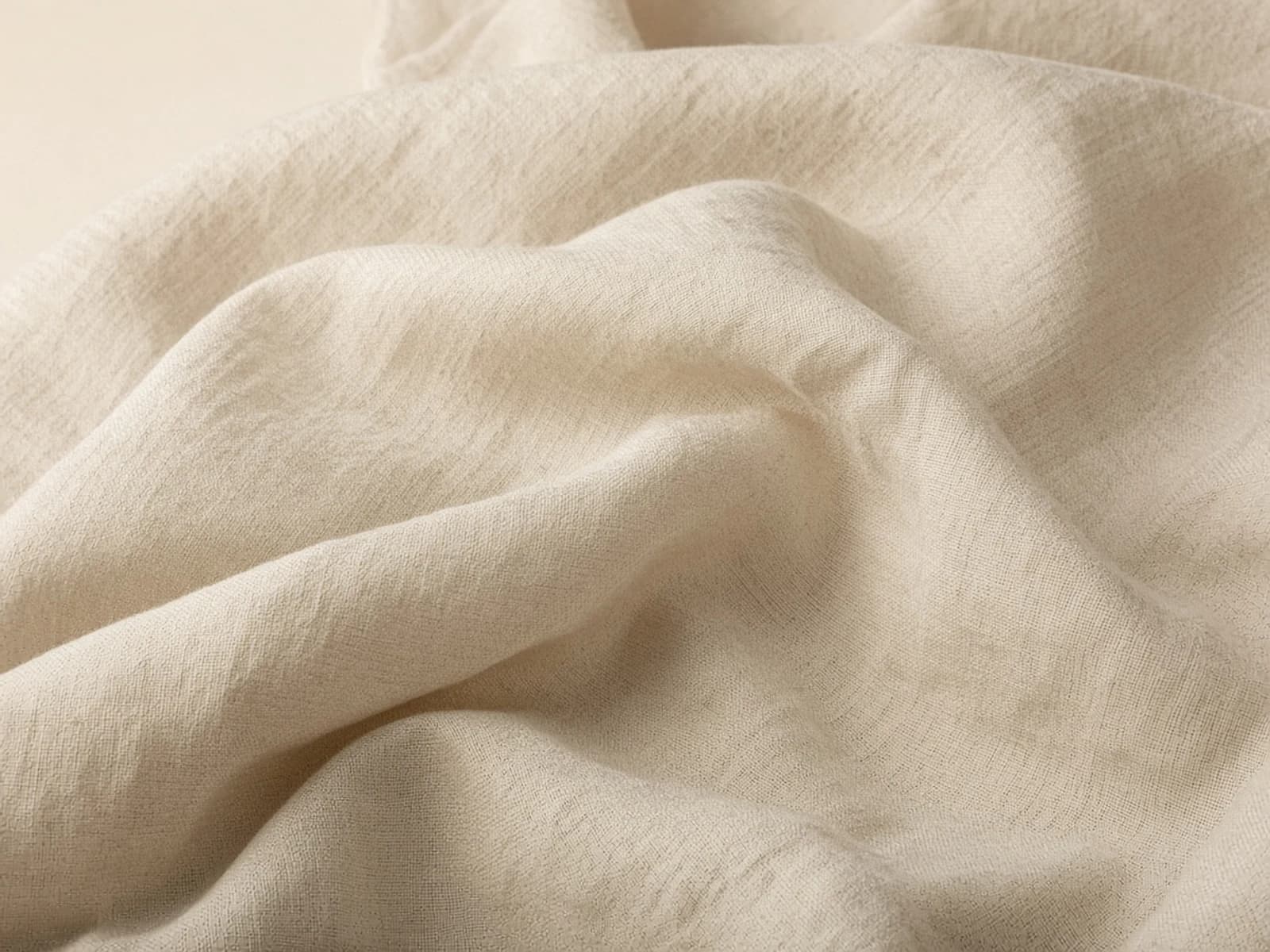
Hand feel, or hand, is the tactile read of a cloth: dry, smooth, crisp, fuzzy, cool, or slippery. It comes from fibre, yarn, weave or knit, and finish. It is not a lab number, so buyers should pair it with composition and GSM.
Hand feel, or hand, is the tactile read of a cloth: dry, smooth, crisp, fuzzy, cool, or slippery. It comes from fibre, yarn, weave or knit, and finish. It is not a lab number, so buyers should pair it with composition and GSM.
Why fabric hand feel changes the brief
Teams use hand language to reject or keep a sample quickly. Vague praise such as nice or premium does not tell a mill what to send next.
Use the hand notes already written on FabStitch fabric pages. When you inquire, repeat the specific words you need, such as dry linen hand or smooth poplin face, instead of a single adjective.
Using fabric hand feel on a real cloth
Choose language that a cutter can check on a sample: crisp, dry, fluid, brushed, or compact. Then confirm it against the published composition.
Finishes can change hand without changing fibre. A softened cotton is still cotton. Do not treat a hand word as a fibre claim.
What to avoid with fabric hand feel
Finishes can change hand without changing fibre. A softened cotton is still cotton. Do not treat a hand word as a fibre claim.
Choose language that a cutter can check on a sample: crisp, dry, fluid, brushed, or compact. Then confirm it against the published composition.
Keep the decision tied to fabric hand feel, not to a swapped synonym.
Use only specs published on the fabric page.
Inquire with quantity and end use when a cloth matches.
Frequently asked questions
Can hand feel be measured by GSM?
No. GSM is weight. Hand is tactile and can differ at the same weight.
Continue with published FabStitch fabrics
Open the marketplace or a related collection, compare the specs that are actually published, and inquire when a cloth matches the brief.