

Why does linen wrinkle more than cotton?
Linen wrinkles more because flax is stiffer and less elastic than cotton. The fiber bends and stays bent. Cotton fibers flex more, so many cotton cloths shake out more easily. Finish and weave still change both. A resin-finished linen and a loose cotton gauze are not the textbook pair.
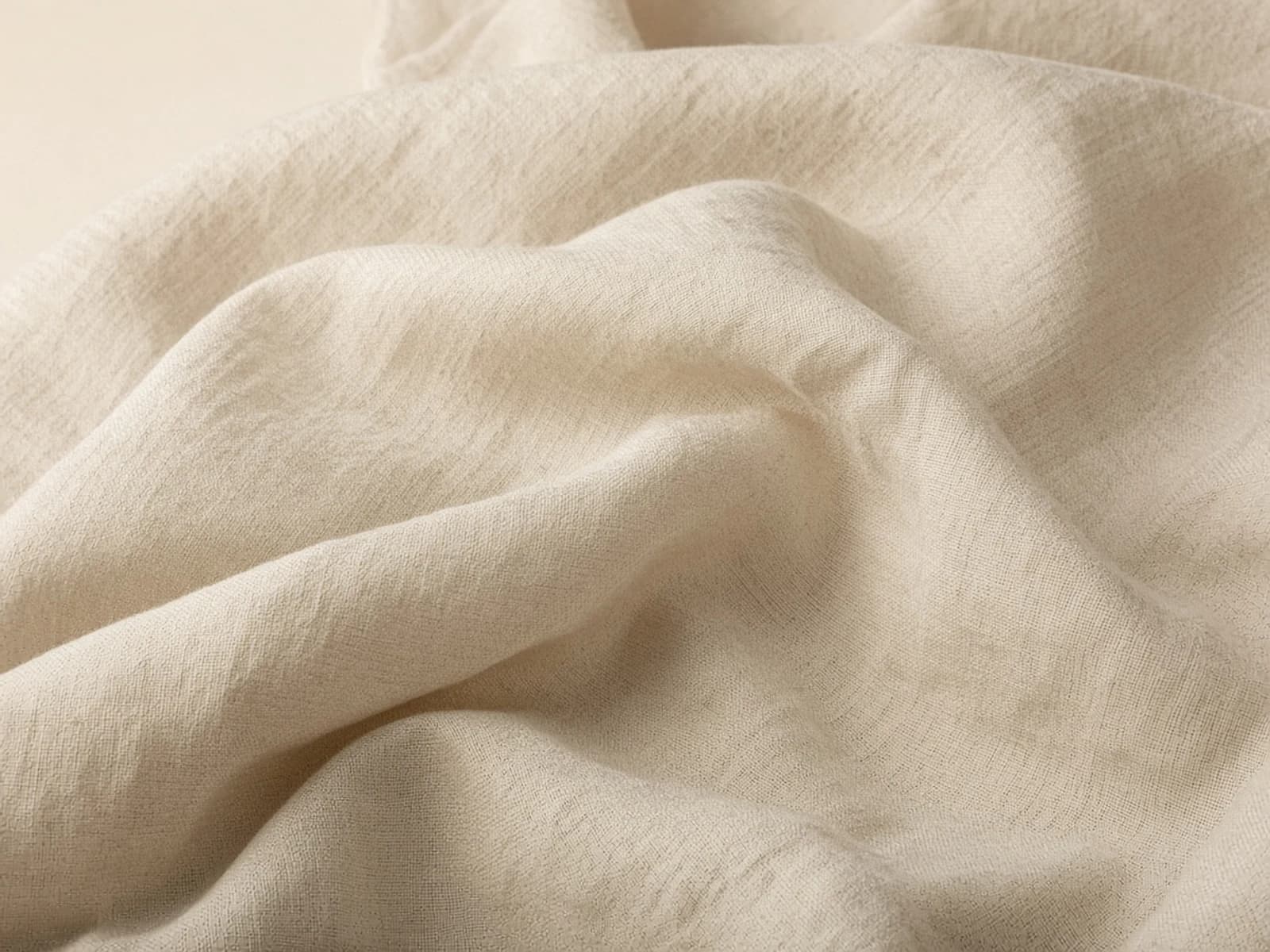
- Crease is part of linen's look.
- Do not reject linen only for wrinkling if the brief wants that texture.
- The cotton-versus-linen guide remains the full comparison.
What to tell a customer
If the garment is meant to look pressed all day, linen is the wrong promise.
If the garment is meant to look lived-in, the crease is the point. Sample it anyway.
How to use this answer
“Why does linen wrinkle more than cotton?” is the only question this page answers. The short answer is: Linen wrinkles more because flax is stiffer and less elastic than cotton. The fiber bends and stays bent. Cotton fibers flex more, so many cotton cloths shake out more easily. Finish and weave still change both. A resin-finished linen and a loose cotton gauze are not the textbook pair.
The points to keep are Crease is part of linen's look. Do not reject linen only for wrinkling if the brief wants that texture. The cotton-versus-linen guide remains the full comparison.
Related terms that belong here, and not as a keyword list, are linen vs cotton crease. Use them when they describe the same decision.
If the next step is a cloth rather than a definition, open the marketplace or the collection linked below and read the published composition and construction. This page does not add a price, a certificate, or a supplier count.
Care, weight, and sourcing only matter here when they change the answer to why linen wrinkles. Otherwise leave them on the guide that already owns that subject.
Related questions
Can a finish stop linen wrinkling?
Some finishes reduce it. Read the fabric page. Do not assume a finish is present.